As collegiate athletics continues to evolve, it is important that we all remain mindful of the increasing demands placed on our young athletes. Whether they are new to a sport or a seasoned veteran, every athlete is navigating transition—a period that research consistently identifies as a time of increased stress and vulnerability.
As they adjust to new teammates, coaches, greater independence, academic responsibilities, financial gains & losses, and rising performance expectations, stress may present in many ways, often affecting mental health, physical well-being, relationships, and performance. Recognizing these signs early is a shared responsibility for each of us.
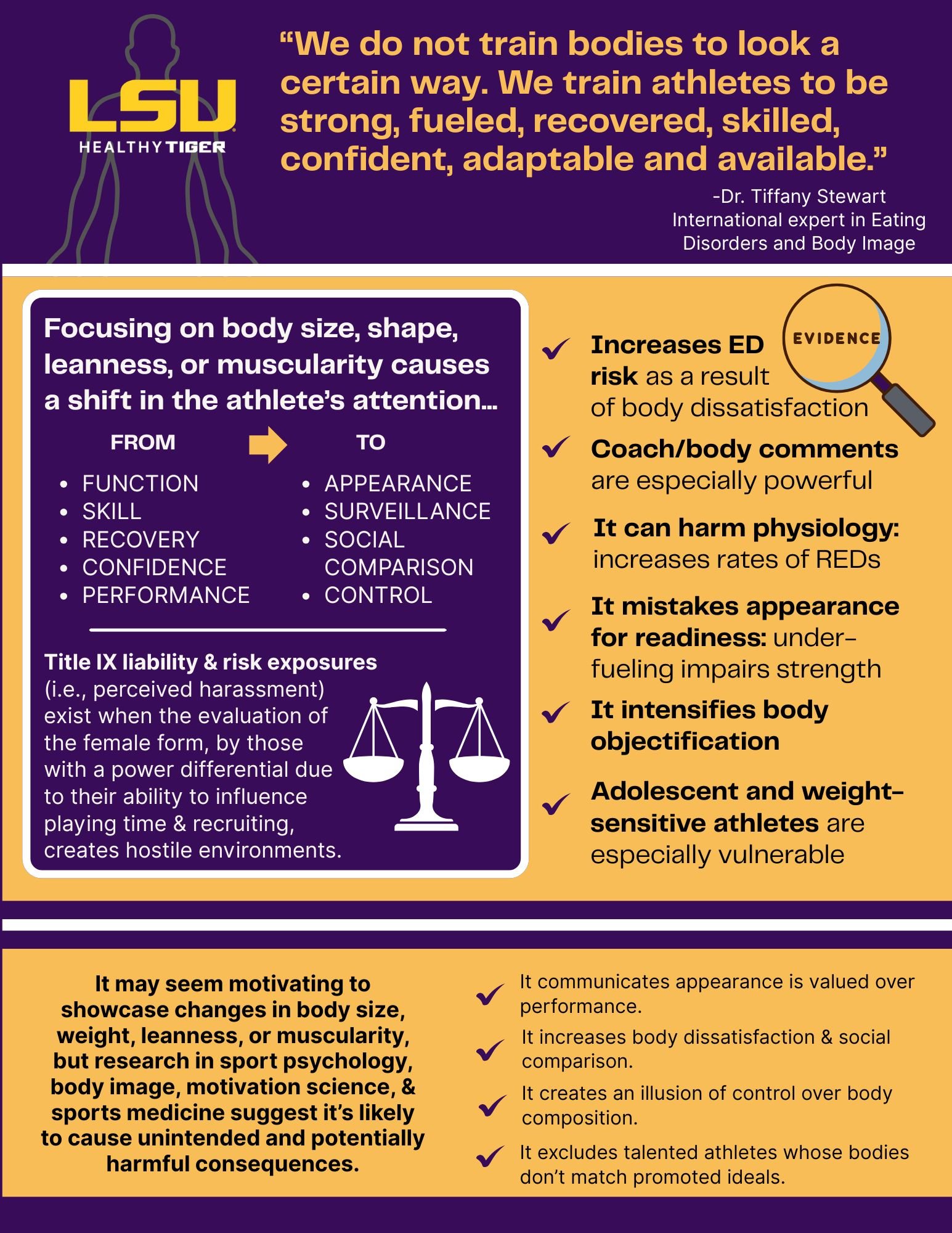
The attached infographic "Optimize Performance By Choosing Function Over Form" helps remind us the benefits of focusing on fueling strong, confident, and mentally prepared athletes. Because the risk of eating disorders, disorder eating, and relative energy deficiency in sport (REDs) have been shown to be higher in athletes as compared to non-athletes, they may be particularly vulnerable. Prevalence rates of eating disorders have been found to range from 6-45% in female athletes and up to 19% in male athletes (Bratland-Sanda, S., & Sundgot-Borgen, J., 2013). Performance pressures and the concerns with ones own body image can fuel negative self-talk can eventually leads to these maladaptive behaviors.
By staying informed and approaching every interaction with empathy, curiosity, and evidence-based care, we can continue to build a culture where both well-being and performance thrive. Don’t hesitate to reach out and ask for help and support!